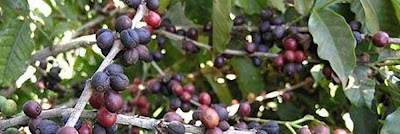
Showing posts with label origin. Show all posts

Wednesday, June 22, 2022

The origin of coffee mocha

By the time of the 15th century, Sufi monks in Yemen had begun cultivating, drinking, and producing coffee for trade. Coffee later became the accepted drink of the Arab world. For a long time, it was traded locally. 

When the Ottoman Turks occupied Yemen in 1536, the coffee bean became an important export, cultivated and shipped from the port of Al-Makha until the late 19th century. In 1555, it was introduced to the city of Constantinople (now Istanbul, Turkey).

By the early seventeenth century, Italian traders had introduced coffee to the West. Other countries soon followed Italy’s example. As the coffee trade grew, traders moved nearer to the coffee-producing countries. Al-Makha on the coast of Yemen became the center of the world’s coffee trade for 150 years.

Later coffee from Al-Makha began to be referred to simply as Mocha coffee. The term “mocha’ originally referred to coffee that was grown on the Arabian Peninsula and shipped from the Yemeni port of Mocha. The history of this word’s use is fairly muddled. It is likely most Europeans tasted coffee before chocolate.
The origin of coffee mocha

Sunday, February 19, 2017

Italian coffee drink of cappuccino

The Italian term cappuccino means capuchin. The color of the coffee reminded Italians of the brown robes with pointed hoods worn by one of the Roman Catholic orders of monks, namely Capuchins.

It is said the first cappuccino coffee served had little peaks of milky foam that looked like the pointed hoods. Cappuccino is the strong coffee is covered with a layer of hot frothy milk topped with a dash of chocolate powder, ‘caffelatte’ (milk coffee), usually half coffee and half milk in a large cup or glass.

Sometimes sweetened cinnamon, cocoa, or vanilla powder is sprinkled over the foamed milk.

In Italy, cappuccino is made by forcing steam through milk or cream to produce a creamy topping, but in North America, it is often served simply with whipped cream on top. In coffee bars of the 1950s, cappuccino was known as ‘frothy coffee’.
Italian coffee drink of cappuccino

Tuesday, October 26, 2010

The Legend of Coffee

The Legend of Coffee
Over the centuries numerous legends have accumulated about the discovery of coffee. Possibly the earliest references to the use of coffee are to be seen in the Old Testament.

Although cultivation may have begun as early as the 6th century C.E., the first written mention of coffee as such by Razes 10th century Arabian physician.

The most well story of the discovery of the coffee plant is concerned with a goatherd tending his flock in the hills around a monastery on the banks of the Red Sea. He noticed that his goats, after chewing berries from bushes growing there started prancing excitedly.

A monk from monastery observed these behavior, took some of the berries, roasted them, and brewed them.

When served, the brew kept his people more alert during the long prayers at night. And this saw the birth of the world’s most stimulating beverage.

The word coffee is derived from the Arabic word ‘quahweh’, which is a poetic term for “wine.” Since wine is forbidden to devout Muslims, the name was change to coffee.

The wild coffee plant is indigenous to Ethiopia, from which it spread to Arabia and nearby countries.

The transport of coffee from countries near Arabia to other parts of the world was limited; the raw beans were not allowed out of the country without steeping in boiling water or heating to destroy their germinating power.

Strangers were not allowed to visit the plantations; it was Baba Budan, a pilgrim from India, who smuggled out a few seeds capable of germination. He planted the seeds in western Ghats of Coorg in South India around 1600 C.E.

The cultivation was expanded during British rule. In Brazil, coffee entered through a Brazilian officer who, while on a visit to French Guyana in 1727, received a plant hidden in a bouquet of flowers as a token of affection from Governor’s wife.

The coffee pant belongs to the Rubiaceae family, which has over 70 species of coffee. But only seven of them have significant economic importance.

The commercially cultivated species are Arabica (Coffea arabica) and robusta (Coffea canephora).

Coffea liberica, another species was devastated during the 1940s by an epidemic of tracheamycosis due to infection by Fusarium xylaroides and the commercial growth of this species has effectively ceased since then.

Coffea robusta, which is noted for its resistance to disease contains more caffeine than Coffea arabica and is thus more economical in the manufacture of instant coffee.

Coffee is one of the most important agricultural products trade worldwide. It is grown and exported by over 70 developing countries in the tropical and subtropical belt, but industrialized countries import and consume most of it.

Of these 70, 51 countries including Brazil, Colombia, Guatemala, India and Mexico are responsible for more than 88% of world output and are exporting members of the International Coffee Agreement.
The Legend of Coffee

Saturday, July 17, 2010

The term of ‘Coffee’

The term of ‘Coffee’
It is perhaps, not generally known that the word “coffee” is of Abyssinian origin. Its name is said to be derived from the city of Kaffa, near which tradition places the origin of the coffee tree.

It is stated on the contrary by Macfarlane that “coffee” is derived from the Arabic word “Kahwah” meaning wine, and that is was the name given by the Arabians to the decoction obtained from the pulp of the coffee berries.

The botanical name Coffee arabica - indicates an Arabian origin.

The coffee tree on the American continent where it grows over wide areas from Mexico southward to the southern limit of toleration, is described as a shrub rather than a tree, growing to a height of from 14 to 18 feet.

It has a rather long and slender trunk, without branches except near the top.

The roots of the plants are thin and very numerous; they grow deeply into the earth, and there is usually one central root, a counterpart of the stem of the tree, running straight down, if not interfered with by instructions.

If the soil be poor on which the coffee is cultivated, it does not reach the dimensions above stated. According to the richness of the soil it is pruned so as to vary from 6 feet in height in poor soil, to 8 or 10 feet in soil of better quality.

One of the objects of thus preventing the growth of the tree to the extreme height, is to facilitate the cultivating of the tree and the harvesting of the berries.
The term of ‘Coffee’

Saturday, October 14, 2006

The History of Coffee

Coffee Beverage
Who would have thought that a berry that was discovered by a herd of goats would be the single most important ingredient in the world’s most popular drink? Legend has it that back in 850AD, a goat herder noticed his herd was full of energy and eating berries he had never noticed. Since the goats seemed to have such a reaction, the herder decided to give it a try! The berries also gave him a burst of energy and he began to feel very happy. Thus, the beginning of the journey for what is now known as coffee!

Actually, the story of the goat herder isn’t the only legend surrounding this discovery. It is also said that an Arabian man was banished to the deserts with his followers to die of starvation. His men became very desperate for nourishment and before long, they were boiling and eating the product of an unknown tree. The broth that was produced by this unknown substance saved the lives of the men! In the nearest town, Mocha, many took their survival to be a religious sign. Because of the discovery, the drink was then named Mocha.

No matter which story you gravitate to, the bottom line is the same: the berries (actually, the seed of the berry) gave energy and zest to all that would consume it! From it’s earliest beginnings, coffee was thought of as a delicacy and any recipes floating around were considered to be a closely guarded secret!

As time passed, the very first coffee trees were harvested around 1100, in the Arabian Peninsula. The coffee drink became a staple of many early civilizations. In the year 1453, There was a law in Turkey that said that a woman could divorce her husband if he didn’t supply her with a daily supply of coffee!

The very first known coffee shop was established in Constantinople around the year of 1475 and since that initial introduction to the general public, coffee has pretty much taken over the world!

Between 1600-1700, there were many advancements, including the world’s first coffee house and the beginnings of commercial production (made by the Dutch). By the middle 1700’s, there were about 2000 coffee shops in Venice, alone!

The first prototype of an espresso machine (made in Italy) was unveiled in the early 1800’s. In the early 1900’s, the first drip coffee machine was invented, making the coffee making process a little less daunting! The automatic espresso maker began its journey in the 1930’s.

By the late 1900’s, coffee became the most popular beverage in the world! The coffee is harvested in many countries, including: Africa, Ethiopia, Brazil, North America, Italy and even Turkey.

This kind of crop can also be easily grown and exported by many third world countries, as well. Made to tempt even the pickiest palate, coffee has evolved to include hundreds of flavors and varying grades and prices.
Source:articlecity
Coffee Beverage

The Most Popular Posts